
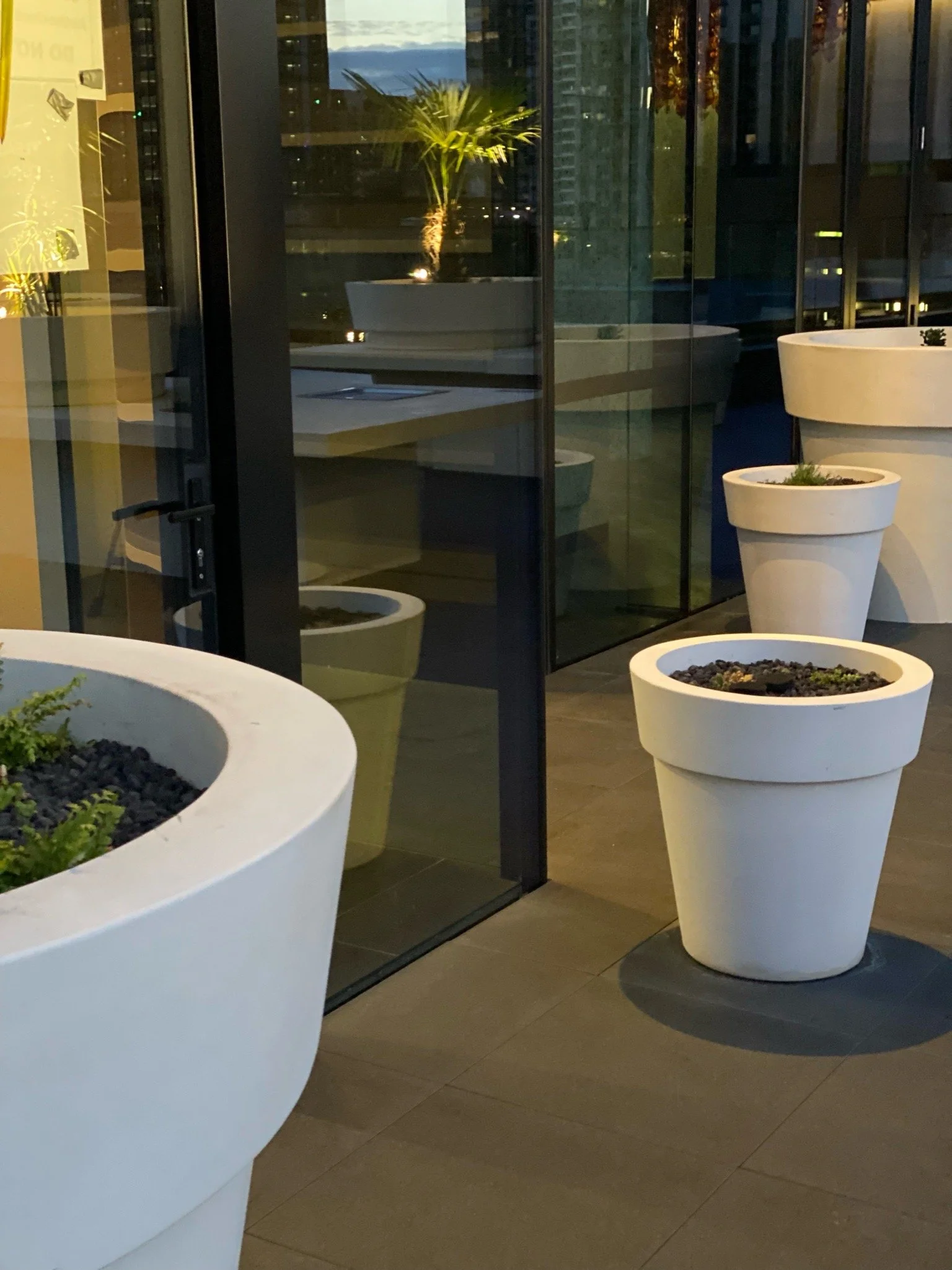
There is a great myth promulgated out in the GRC manufacturing world that custom-made GRC planters need to be very expensive. In some specific cases it is true, but it is not necessarily always the case. To explain this, let’s have a look at some of the background issues that relate to the costing of custom-made GRC planters:
Key Factors That Drive Custom GRC Planter Costs
Custom vs. Standard Mould Cost Recovery
Custom-made GRC planters generally require a bespoke casting mould that may only be used once. Consequently, the manufacturer must recover the entire cost of that mould within the price of your custom order. In contrast, standard-size moulds are reusable across hundreds of units, spreading their initial cost thinly over time. Therefore, keeping custom planter costs low depends heavily on minimising the labour and material required to fabricate the custom mould.
Mould Material Selection (Steel, Rubber, Resin, Wood)
GRC moulds can be fabricated from steel, rubber, resin, or wood—each carrying vast differences in price and durability:
Steel
Extremely expensive; requires high-volume production to recover costs.
Rubber
High cost and excellent for complex detailing, but easily damaged and offers low reusability.
Resin
Strikes an optimal balance between moderate cost and decent reusability.
Wood
The most cost-effective option for low-volume or single-use custom moulds.
A manufacturer’s material choice directly impacts the final quote you receive.
Manufacturing Method: Spray-Up vs. Pour-Casting
The production method plays a massive role in mould complexity and cost:
Spray-Up Method
Uses open-face single moulds where GRC slurry is sprayed in layers. These moulds are significantly cheaper to build and yield a stronger final product.
Pour-Casting Method
Requires complex double-walled moulds to contain the poured liquid concrete slurry. These double-walled moulds are expensive to build and store, leading pour-casting manufacturers to heavily mark up or avoid custom projects altogether.
Labour Costs for Mould Fabrication
Fabricating GRC moulds requires specialized craftsmanship. The labour hours needed to build a mould represent a significant portion of the total cost, which varies based on the chosen fabrication method and complexity.
Supplier Preference and Pricing Strategy
Many suppliers prefer selling standard sizes because they are easier to handle through standard inventory processes. To steer buyers away from custom requests, some suppliers intentionally overquote custom jobs. It is an industry practice to watch out for when evaluating quotes.
Summary
Custom-made GRC planters will most likely be comparatively expensive if the manufacturer making them:
uses the pour-casting production method
makes the casting moulds out of either steel or rubber
has high labour costs
has a standard range of GRC planters that it would prefer you to purchase
Custom-made GRC planters will not be much dearer than standard sized planters if the manufacture making them:
uses the spray-up production process method
makes the casting moulds out of either resin or wood
has low labour costs
Conclusion
It’s pretty clear who is driving the myth that custom-made GRC planters need to be very expensive. It’s the manufacturers, or the resellers for those manufacturers, that don’t want you to order custom-made planters because their manufacturing processes, mould making methods and/or high labour costs make their custom-made prices uncompetitive. However, custom-made GRC planters do not need to be a lot more expensive than standard sized planters if you choose the right manufacturer.
Designing something unique for your commercial build?
Explore custom GRC planter options and see how we keep custom manufacturing cost-effective.