
From a broad procurement perspective, GRC planters can be sourced either as a commodity or as a solution. Both approaches can be appropriate depending on project scale, design complexity, and site logistics.
Let’s examine how each sourcing model works and which one fits your project requirements.
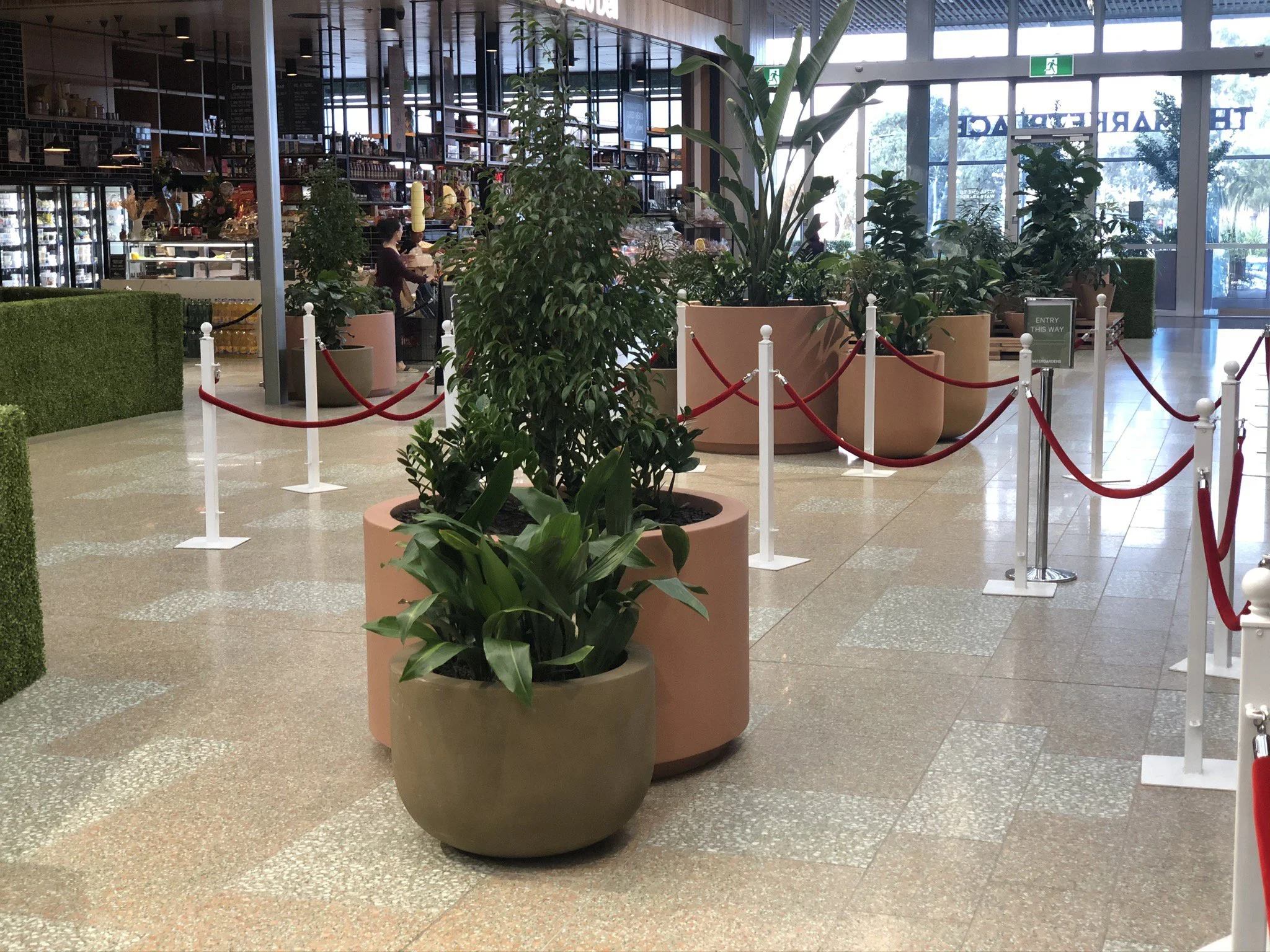
The Commodity Approach
In the commodity approach, buyers have a clear understanding of their needs or are willing to compromise on standard planter sizing. The sourcing decision centers primarily around price and immediate stock availability.
Best suited for
Smaller, less complex, or low-risk commercial projects.
Procurement model
Sourced off-the-shelf from whichever supplier or distributor holds appropriate inventory on hand.
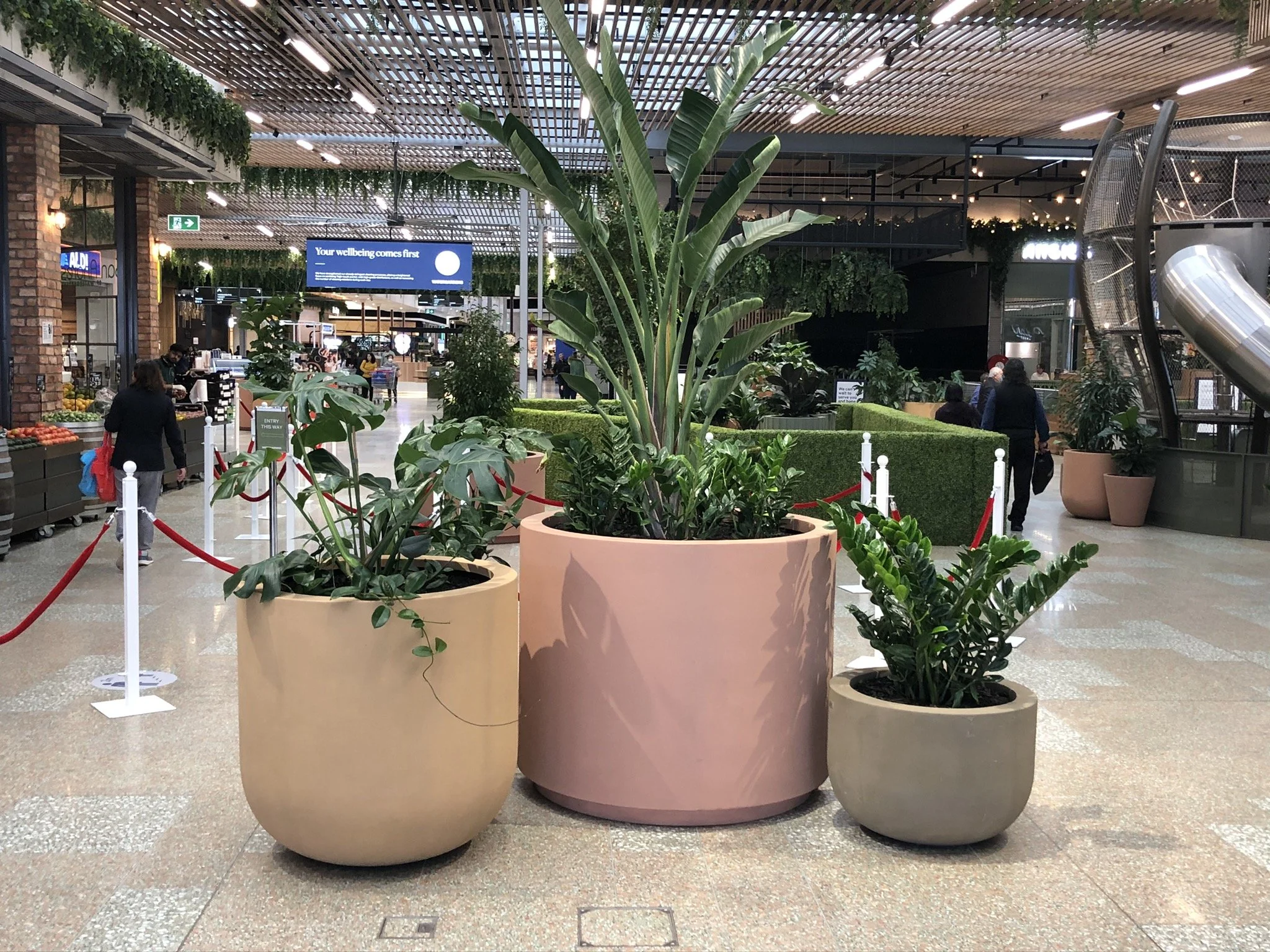
The Solutions Approach
For larger, more complex, or highly specific architectural projects, buyers require a complete procurement and delivery solution rather than just a product. This approach integrates specification management, custom engineering, accurate costing, and complex delivery logistics.
Sourcing GRC planters on large commercial builds is rarely simple. Delays, damaged pots, miscalculated structural specs, or uncoordinated site deliveries typically happen at the tail end of a project—where they cause maximum disruption to handover dates.
By taking a solutions-based approach, the supplier becomes an active project partner, contributing technical expertise and resources directly into the project plan to eliminate last-minute supply surprises.
Satu Bumi’s Solutions Approach
To simplify GRC procurement for large-scale developments, Satu Bumi provides an integrated supply solution encompassing six elements at no additional cost:
-
Satu Bumi’s customer service team works directly with estimators to balance design intent, cost, and manufacturing practicality. Early engagement prevents costly estimation errors and helps identify optimal sizes, shapes, and finishes before final budgets are locked.
-
As a direct manufacturer, Satu Bumi provides an in-house product engineering team capable of delivering detailed shop drawings, structural recommendations, and physical sample prototypes—a service traditional distributors cannot offer.
-
Leverage Satu Bumi’s extensive catalogue of existing precast GRC moulds to reduce production lead times and lower custom tooling costs. Standard mould shapes can be seamlessly mixed and matched with custom planter designs.
-
Eliminate miscommunication by dealing directly with the engineering and factory team. Direct dialogue ensures technical specifications and custom details are interpreted accurately from design to fabrication.
-
Direct supply eliminates third-party distributor markups, enabling more competitive pricing and transparent production tracking.
-
On large-scale developments, Satu Bumi assigns a dedicated supplier-side project manager to collaborate with your site manager. This ensures delivery schedules, crane logistics, and staging align perfectly with construction milestones.
Why an Integrated Supply Model Matters
Taking an order for standard off-the-shelf planters is simple. However, managing large quantities of varying dimensions, custom moulds, and tight site delivery windows requires rigorous coordination.
Having a single point of project management at the supplier end is often the deciding factor between a smooth installation and costly project delays.
Conclusion
If your project requires a small quantity of standard-sized planters, treating GRC planters as a commodity is the most efficient path.
However, for large-scale commercial developments or custom architectural designs, adopting a solutions approach is critical. Regardless of the model you choose, selecting a reliable, highly capable supplier remains the most vital decision in the entire sourcing process.
Looking for tailored solutions for your landscape design?
Browse our range of GRC finishes, fixings, and custom extras.