
Choosing precast concrete planter boxes for commercial landscaping projects is easy, right? Well, maybe not as easy as it looks, but since planter boxes usually form a long term and highly visible element of most commercial building or landscaping projects, it’s important to get your planter box decision right. Let’s have a look at five things you should take into consideration.
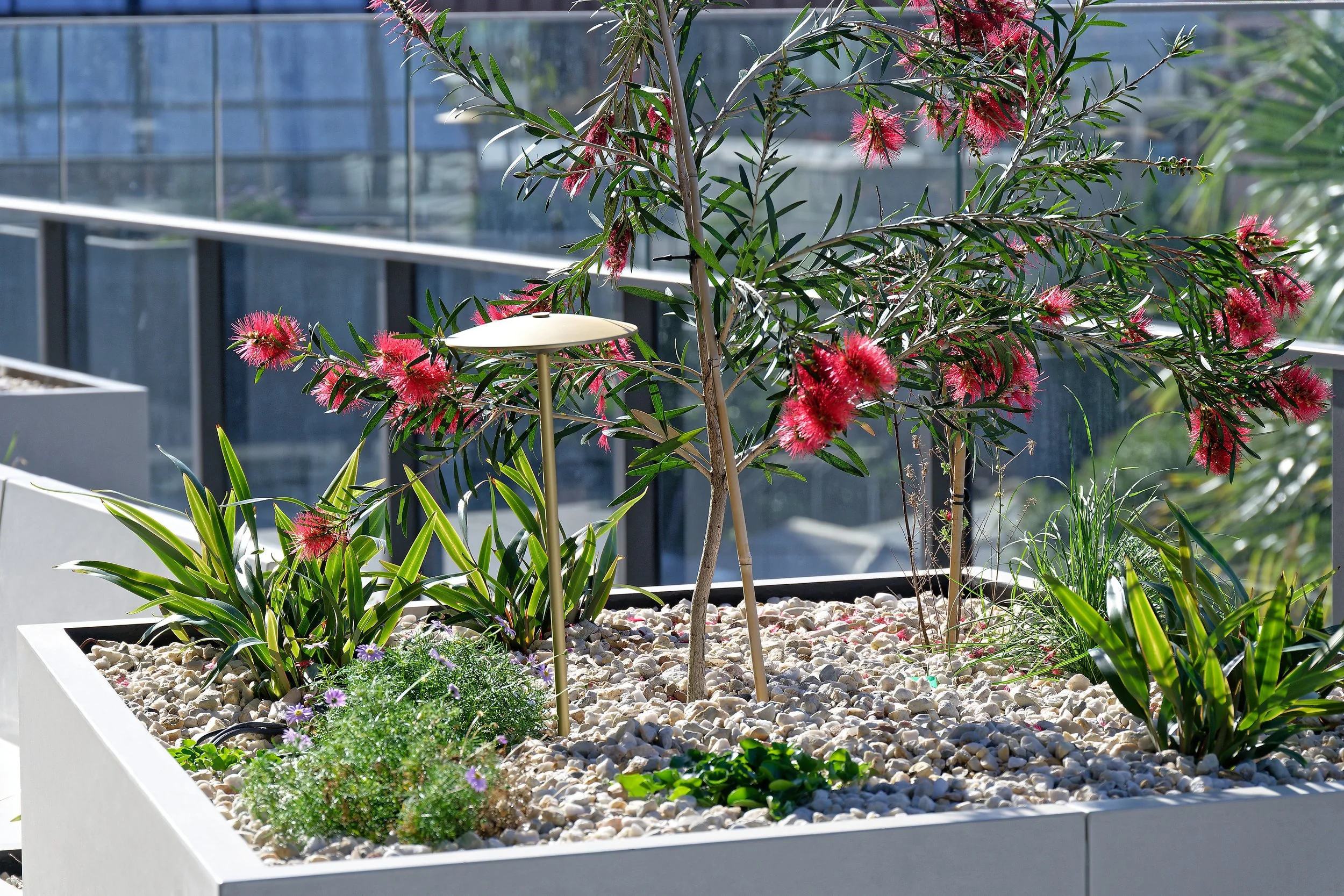
01. Outside Planter Boxes Need to Last
Commercial buildings are typically designed to remain in service for at least twenty years before requiring major refurbishment. It follows that the landscape elements surrounding these buildings should be expected to perform over a similar timeframe.
Planter boxes are often permanent, highly visible features of commercial projects. Choosing a product that delivers long-term durability is therefore an important design decision.
The challenge is that many planter boxes simply aren't designed to last.
Why many planter box materials fall short
Planter boxes can be manufactured from a wide variety of materials—including clay, plastics, fibreglass, metals, stone, timber, blockwork, and composite materials. While many of these can look attractive when first installed, long-term commercial performance is another consideration.
| Material | Common long-term consideration |
|---|---|
| Clay, plastics & fibreglass | Can deteriorate under prolonged exposure to harsh weather and UV. |
| Metals | Often expensive and may be susceptible to corrosion. |
| Stone | Heavy and can develop hairline cracks that contribute to water seepage. |
| Timber | Difficult to waterproof completely and may deteriorate over time. |
| Blockwork | Heavy and prone to cracking, potentially damaging waterproofing membranes. |
| Poly-based composites | Limited long-term performance history in planter applications and may present fire-rating considerations. |
Why GRC performs differently
When these factors are considered together, each alternative material involves trade-offs that may affect long-term commercial performance.
GRC (Glassfibre Reinforced Concrete) offers a different approach. As a concrete-based material, it inherits the durability, weather resistance, and longevity that have made concrete one of the world's most trusted construction materials for thousands of years.
For commercial landscaping projects, expecting a well-designed GRC planter to perform for twenty years or more is a realistic expectation.
Why glassfibre reinforcement matters
Traditional concrete already provides excellent:
Compressive strength
Weather resistance
Design flexibility
Architectural versatility
However, planter boxes also require resistance to bending and tensile forces created during transportation, installation, and service.
Glassfibre reinforcement provides this additional flexural and tensile strength, allowing GRC to produce planter boxes that are both durable and structurally reliable while remaining significantly lighter than conventional precast concrete.
GRC combines the proven durability of concrete with the additional strength provided by glassfibre reinforcement, making it a practical and long-lasting solution for commercial planter box applications.
02. GRC Suppliers Are Not All the Same
GRC planter suppliers generally fall into two categories: manufacturers and resellers. Both play an important role in the market, and each offers distinct advantages depending on project requirements.
Understanding the differences can help architects and contractors select the most suitable supplier for factors such as customisation, lead time, quality control, and pricing.
| Consideration | Manufacturer | Reseller |
|---|---|---|
| Stock availability | Manufactured to order in virtually any quantity. | Readily available stock, although typically limited to warehouse capacity. |
| Pricing | Can be manufactured to different specifications, with pricing reflecting the required quality and performance. | Generally competitive pricing, often focused on standard products. |
| Product range | Standard products plus the flexibility to manufacture custom designs. | Usually limited to stocked or imported product ranges. |
| Customisation | High flexibility with in-house engineering and tailored project solutions. | Limited customisation options depending on manufacturing partners. |
| Production control | Direct control over manufacturing, quality assurance, and delivery schedules. | Dependent on third-party manufacturers for production and lead times. |
| Best suited for | Large commercial projects, customised designs, and ongoing supply. | Smaller projects requiring readily available standard planter boxes. |
When a reseller may be the right choice
Resellers can be an excellent option when projects require readily available products and fast delivery. They are particularly suitable for standard planter boxes where customisation is not a priority.
A reseller may be the right choice if your project requires:
Fast delivery
Standard planter sizes
Small to medium quantities
Minimal design customisation
When working directly with a manufacturer
For larger commercial developments, working directly with a manufacturer offers greater flexibility throughout the design and construction process. Manufacturers can typically support project-specific requirements that extend beyond standard product ranges.
A manufacturer may be the better choice if your project requires:
Custom dimensions or architectural forms
Large production quantities
Engineering and drafting support
Greater control over quality and production
Reliable manufacturing schedules
Some suppliers promote themselves as "cutting out the middleman." Before relying on this claim, it is worth confirming whether the business is the actual manufacturer or an independent reseller, as this can influence communication, production control, and project flexibility.
Commercial landscaping projects often require customised planter dimensions, engineering input, and reliable production scheduling. For these requirements, working directly with a manufacturer—or with a reseller backed by a capable manufacturer—can provide greater flexibility and confidence throughout the project.
03. GRC Manufacturers Are Not All the Same
The term GRC manufacturer covers a wide range of businesses with different production capabilities, pricing structures, and areas of expertise.
Understanding these differences can help you identify which type of manufacturer is best suited to your project's requirements.
| Manufacturer Type | Best Suited For | Key Considerations |
|---|---|---|
| Job Shop Manufacturer | Specialised architectural projects, bespoke GRC elements, and smaller production runs. | Excellent technical expertise and quality, but generally limited production capacity and higher manufacturing costs. |
| Australian Manufacturer | Projects requiring locally manufactured products and close project collaboration. | Premium quality and local support, although higher labour and operating costs are typically reflected in pricing. |
| Overseas Manufacturer | Large commercial projects requiring competitive pricing and high-volume production. | Cost-effective manufacturing, provided the supplier can demonstrate consistent quality, reliability, and delivery performance. |
| Hybrid Manufacturer | Projects seeking Australian project management combined with efficient overseas manufacturing. | Combines local customer support with competitive manufacturing costs and scalable production capacity. |
Job Shop manufacturers
Job Shop manufacturers typically specialise in bespoke architectural GRC elements such as facade panels, cladding, and complex structural components.
Generally suited for:
Highly specialised projects
Small production runs
Complex architectural elements
Considerations:
Higher production costs
Limited manufacturing capacity
Longer lead times for large planter orders
Local Australian manufacturers
Australian manufacturers capable of producing both high quality and large production volumes are relatively uncommon.
Generally suited for:
Projects requiring local manufacturing
Premium quality products
Close project collaboration
Considerations:
Higher labour costs
Higher manufacturing overheads
Premium pricing
Overseas manufacturers
Overseas manufacturing can provide significant cost advantages, particularly for labour-intensive products such as GRC planter boxes.
Generally suited for:
Large commercial projects
Competitive project budgets
High-volume production
Considerations:
Selecting a reliable manufacturer is essential
Communication and quality control should be carefully assessed
Delivery scheduling becomes increasingly important
Where Satu Bumi fits
Satu Bumi operates as a hybrid manufacturer, combining Australian ownership, project management, engineering, marketing, and customer support with dedicated manufacturing facilities in Indonesia.
This approach combines Australian project management and quality expectations with the manufacturing efficiencies available through Indonesian production, providing a balance of quality, reliability, competitive pricing, and production capacity.
Commercial projects have different priorities depending on budget, lead time, project scale, and design complexity.
Understanding the strengths of each type of GRC manufacturer makes it easier to identify the supplier best suited to your project's requirements.
04. Not All GRC Manufacturers Are Good GRC Manufacturers
Working directly with a manufacturer offers many advantages, but manufacturing capability alone does not guarantee product quality.
The real difference lies in the manufacturer's commitment to quality materials, recognised production standards, and consistent quality control.
What to look for in a GRC manufacturer
A reputable manufacturer should demonstrate a commitment to:
High-quality raw materials
Recognised manufacturing standards
Consistent quality control
Product testing and inspection
Reliable production processes
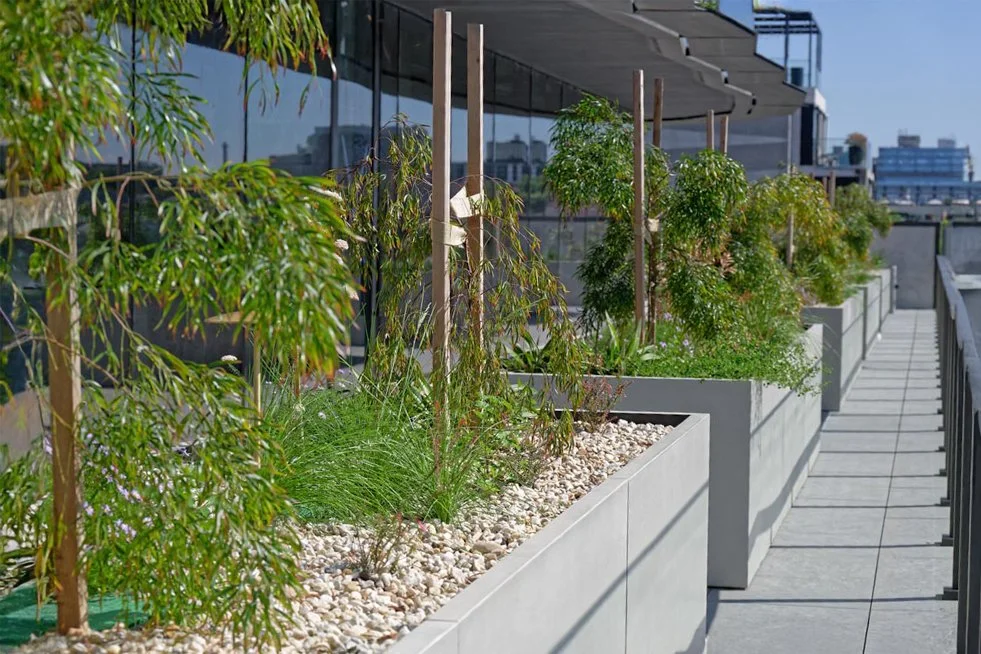
Industry-recognised manufacturing standards
One useful reference is the GRCA Specification for the Manufacture, Curing & Testing of Glassfibre Reinforced Concrete (GRC) Products, published by the International Glassfibre Reinforced Concrete Association (GRCA).
These guidelines provide recognised manufacturing practices that help ensure long-term product quality and durability.
Price is important—but so is value
Selecting the lowest-priced product may reduce the initial purchase cost, but poor manufacturing practices or inferior raw materials can lead to cracking, premature failure, and costly replacement.
When specifying GRC planters, consider the long-term value of product quality rather than focusing solely on purchase price.
Good GRC is the result of quality materials, recognised manufacturing standards, and disciplined production processes. Taking the time to evaluate these factors will significantly improve the likelihood of selecting a planter system that performs well over the long term.
05. Price Is a Factor But Not the Full Story
Price will always be an important consideration in commercial procurement. However, when specifying GRC planter boxes, it is important to distinguish between purchase price and long-term value.
| Focusing only on price | Focusing on long-term value |
|---|---|
| Lowest initial purchase price | Best long-term value for the project |
| Lower-cost raw materials | High-quality raw materials |
| Basic manufacturing practices | Recognised manufacturing standards |
| Limited quality control | Consistent quality assurance |
| Higher risk of cracking or premature failure | Greater durability and reliability |
| Potentially higher maintenance and replacement costs | Lower lifecycle maintenance costs |
| Short-term savings | Long-term project performance |
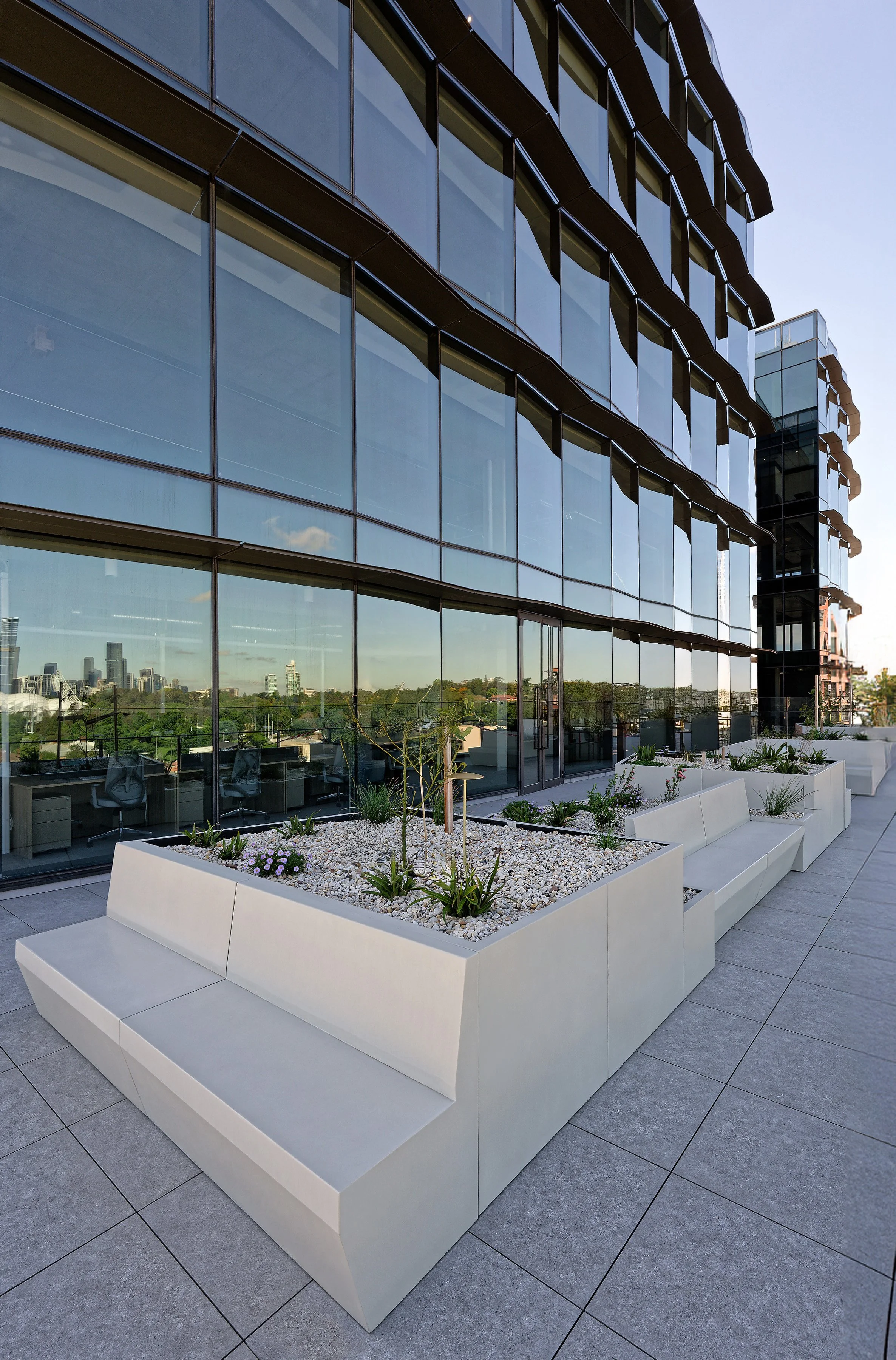
What influences the price?
A lower selling price does not necessarily indicate greater efficiency. It may also reflect compromises in raw materials, manufacturing processes, quality control, or production standards.
Price may be influenced by:
Raw material quality
Manufacturing standards
Production efficiency
Quality assurance
Supply chain structure
Distribution costs
Rather than focusing solely on the lowest quotation, evaluate suppliers on their ability to deliver quality, reliability, technical support, and long-term product performance.
The best GRC planter supplier is rarely the one with the lowest price. It is the one that consistently delivers durable products, dependable service, recognised manufacturing standards, and the confidence that your planter boxes will continue performing for many years to come.
Conclusion
The success of a commercial landscaping project depends on more than selecting the right planter design. Long-term performance is influenced by the quality of the materials, the manufacturing process, the supplier's technical capability, and the manufacturer's commitment to recognised industry standards.
Whether you purchase through a reseller or work directly with a manufacturer, choosing the right GRC manufacturer is one of the most important decisions you can make. A well-manufactured GRC planter box should deliver reliable performance, durability, and lasting value throughout the life of the project.
Choose your GRC manufacturer carefully.
Want a hassle-free GRC sourcing process?
Get in touch with Satu Bumi to get clear timelines and freight terms tailored to your project schedule.